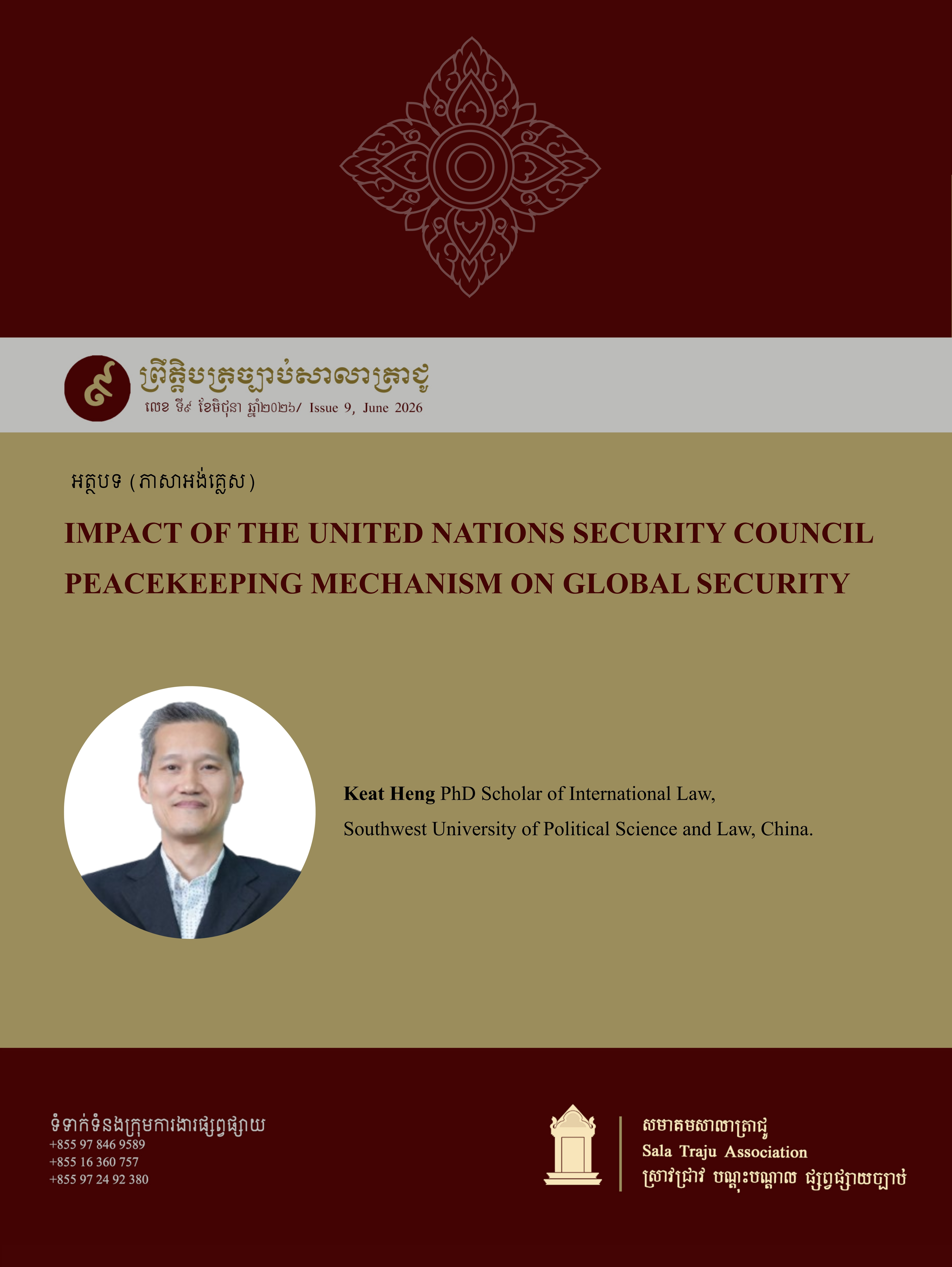
Impact of the United Nations Security Council Peacekeeping Mechanism on Global Security
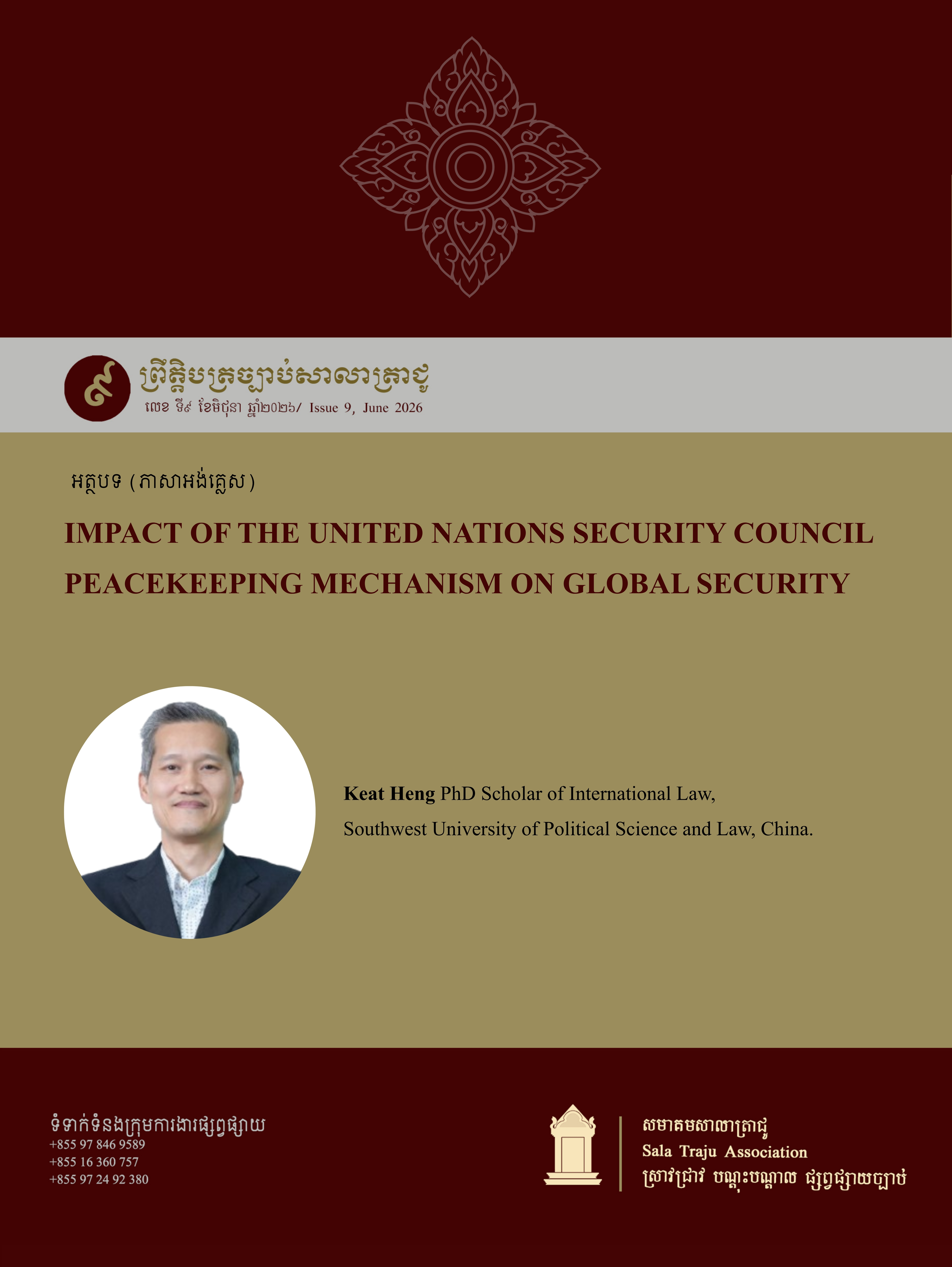
By KEAT Heng, PhD Scholar of International Law, Southwest University of Political Science and Law, China.
ABSTRACT
This paper evaluates the peacekeeping role of the United Nations Security Council (UNSC) as a key mechanism for maintaining international stability amid ongoing global crises, including the Russia–Ukraine war and the Middle East tensions in 2026.
Established in 1945, the UNSC consists of five permanent members with veto power (United States, United Kingdom, Russia, China, and France) and ten non-permanent rotating members. The Council is responsible for resolving disputes, imposing sanctions, authorizing military deployments, and conducting peacekeeping operations in various regions worldwide.
However, the use of veto power by permanent members often delays or prevents action, as seen in Russia’s blocking of resolutions related to Ukraine and U.S. vetoes on Gaza-related resolutions between 2023 and 2025, along with challenges such as insufficient funding and unclear mandates.
Despite these limitations, UNSC peacekeeping efforts still help reduce conflict and maintain international order, but stronger financial support and institutional reforms are needed to enhance effectiveness. Structural imbalances that favor the permanent five members continue to restrict enforcement, and proposed reforms include limiting veto use and expanding Council membership.
To cite this article: Keat Heng, Impact of the United Nations Security Council Peacekeeping Mechanism on Global Security, Sala Traju Law Bulletin, Issue 9, June 2026. PDF